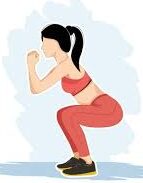
Squats Exercise Benefits
Strong From Within Series – Part 5
Squats Exercise Benefits for Functional Strength
Squats aren’t just about shaping your legs or glutes or hips but they are one of the most functional exercises you can do at home
From standing up from a chair to lifting groceries, these squats train the muscles you use every day
Doing them regularly supports bone health, metabolism, balance and keeps daily movements easier as we age
Why Squats for Functional Strength Matters for Women the most
Strengthens the quadriceps, hamstrings, glutes and core
Supports the bone density thus reducing risk of osteoporosis
Improves the balance and stability, hence lowering risk of falls
Boosts your metabolism by engaging the large muscle groups
Makes your everyday activities easier like bending, lifting or climbing stairs
How to Do a Basic Squats for Functional Strength-- Step by Step Procedure
Start Position:
Stand with your feet hip-width apart
Keep your chest lifted, shoulders relaxed and core your engaged
Lowering:
Push your hips back and bend your knees like sitting into an invisible chair
Keep weight on your heels with your knees aligned with toes
Depth:
Lower until your thighs are parallel to the floor, if comfortable
Don’t force depth rather just listen to your body
once you are comfortable, your can push your hips further down but no force, everything should be in comfort and rhythm
Rise:
Press through your heels and lift back to standing
Squeeze your glutes while coming up at the top
Reps:
Start with 8 to 10 repetitions, 2–3 sets or however you are comfortable
Variations for Home Practice for Squats Exercise Benefits
Chair Squat: Using a chair to guide depth and balance

Wall Squat: your Back against a wall for extra support

Pulse Squat: Holding halfway down and pulsing gently for 5–10 counts

Common Mistakes to Avoid while doing Squats for Functional Strength
Letting knees collapse inward
Leaning forward excessively
Rising onto toes instead of keeping weight on heels
Everyday Tip for Squats Exercise Benefits for Functional Strength
Try squats during taking breaks from your work or as a warm-up before other exercises
Small, consistent practice adds up quickly
also read my blog
here's to conclude with a disclaimer
This is a general wellness guide
If you have knee, hip, or back issues, consult a doctor or physiotherapist before starting squats
these are my personal experiences that i share with my readers because i have personally benefitted from this exercise and hence wanted to share it on this platform
this exercise not only benefits females but males friends can also do this exercise for their pelvic muscles
hope you liked this blog
until next time, keep smiling
much love .. stay happy … stay blessed … always
SMITHA
Discover more from REFLECT WITH SMITHA
Subscribe to get the latest posts sent to your email.
